How To Crate Train Your Dog
Why crate train?
Crate training is the best and easiest way to successfully house train puppies. It greatly limits the number of accidents that happen in the house, when the dog is unsupervised.
Crate training is also beneficial for alleviating separation anxiety problems and can completely prevent them if you start the training early enough.
The chances of your dog needing to be in a crate at some point in their life(overnight vet visits, groomer, airplane flights, long car rides, etc) is very high so why not start teaching your dog that it’s not scary while there aren’t any outside pressures. Doing this now will make sure you and your dog are prepared for any of the unexpected situations in the future.
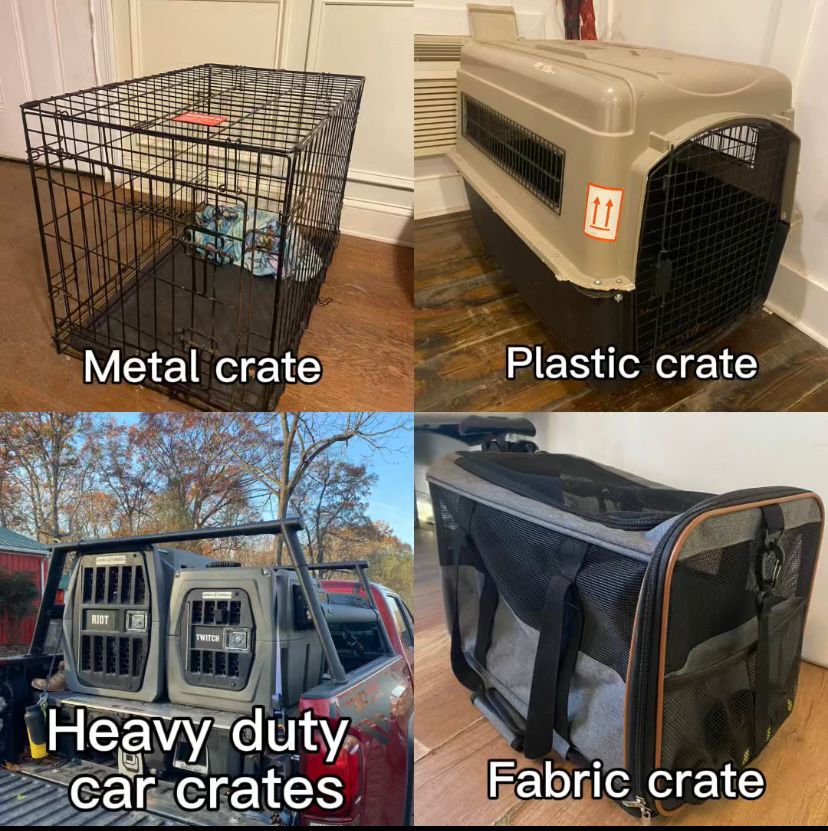
Crating your dog in the car is the safest mode of transport for both you and your dog. It prevents the dog from distracting you while driving and ensures that your dog is safe during any accident situations.
Getting Started:
What you need; Before beginning to train your dog you need to make sure that you have the right size crate and rewards to reinforce the dog correctly.
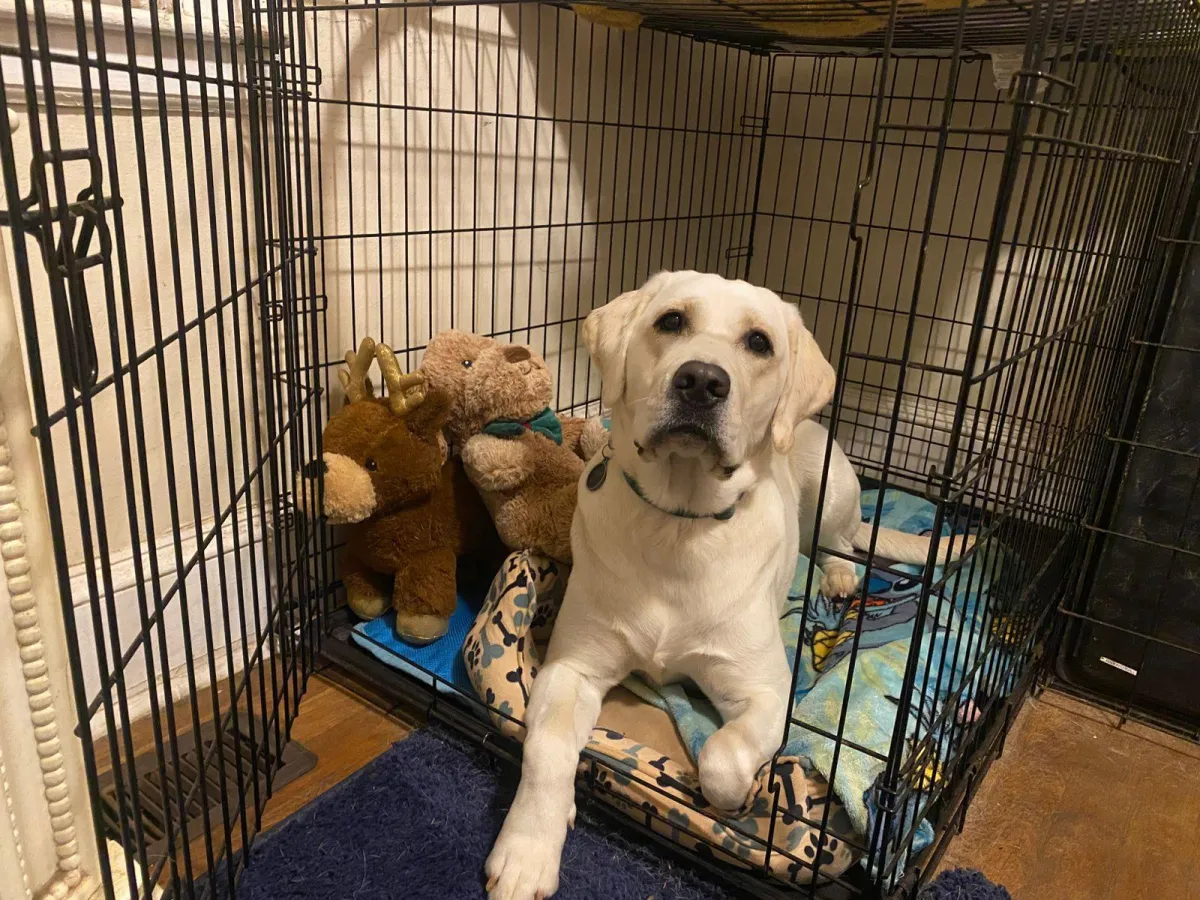
Choosing the right crate size is important because you want your dog to be as comfortable as possible and really enjoy their time in the crate. You should buy a crate that allows your dog to easily sit and turn around without bumping their head on the top or sides.
If you have a puppy then I recommend that you either buy a smaller temporary crate and then buy a bigger one when they are older. Alternatively you can buy a big one that would fit them when fully grown and then just block off a portion of it so that you can adjust it as they mature.
Having the right rewards is very important because you want the dogs to enjoy being in their crates and what better way than to enjoy a tasty snack while in there. If your dog is very food motivated then you probably don’t need to make the rewards too high value and could just use their usual kibble/pellets. If your dog is very picky then I’d recommend testing out what treats your dog prefers and try using the highest value one for the following exercises. If you are really struggling to find something to motivate your dog then I would recommend trying out some deli meat or wet dog food since most dogs find that very appealing.
Extra tips: I recommend buying metal crates instead of fabric ones since they are more durable and last longer, especially if you have a puppy who might try chewing it. The fabric ones work best for dogs that are already fully crate trained.
Introducing the crate; 5 Steps to get your dog comfortable in the crate.
Once you have all your things ready, the next thing I’d suggest you do is to set your crate up in a very open area of your house and allow the dog to initially investigate on their own without any pressure to get into it.
The next step is to scatter some treats into the doorway of the crate and then step back and allow the dog to go in and eat the treats(make sure the door of the crate is either held back or secured back so that it doesn’t accidentally give the dog a fright and close behind them).
After that you should practice having the dog outside the crate but practice closing the door and rattling it around a bit while simultaneously rewarding them. This is basically just to ensure that they won’t get a fright once the door closes behind them when they are inside the crate.
Once your dog is fully comfortable with the above steps, then you can move on to placing treats right at the back of the crate and allow the dog to go and get the food. Practice gently closing the door behind the dog and then immediately opening it as the dog finishes the treats and tries to exit.
An additional step I like to include is where I toss treats into the back of the crate but I close the crate door before the dog goes in. I then wait a few seconds and allow the dog to get a bit frustrated trying to get to the treats, then I open the door and the dog should rush in to get the food. What this does is build up a desire for the dog to want to be inside the crate and they will then want to get in whenever you open the door.
Extra tips: If you have a very confident dog then you can probably skip some of the steps.
If your dog is hesitant to approach the crate on their own in step 1 then try tossing treats around the outside of the crate this will help them build up their confidence.
How to build up duration in the crate; How long can I leave him?
Now that you have a dog that is comfortable being in the crate, I would then progress to introducing longer periods of time. The best way that I have found to do this is by simply feeding the dog all their meals in the crate.
Some dogs may get a bit stressed when they realize that the door is closed and they can’t get out immediately, but the best way to teach them to remain calm is to just to remain calm yourself and wait for them to stop crying/scratching before letting them out. It’s very important that you stay consistent with this throughout their training.
I would continue using the meal times for practice sessions and slowly increase the amount of time that the dog has to relax in the crate after finishing their meal. Make sure that you are only rewarding and releasing them out of the crate when they’re calm.
Once your dog is doing well during meal times you can then start introducing crate time during other times of the day. Make sure that you are still providing the dog with something to keep it busy(Kong toys, and meaty chews are awesome for this) while in there.
From here on you can continue increasing the time. My suggestion is that you constantly mix up the amount of time that the dog has to be in there so that the dog doesn’t always think it will be hours and hours. My general routine would be to have two longer crate sessions and one short one each day.
Extra tips: If you have a puppy then you do need to take their bladder into consideration when increasing the crate times. The general rule of thumb is that the dog can hold their bladder for as many hours as they are months old. Example; a 4 month old puppy would be able to last 4 hrs, I’m not suggesting that you start with that, but it should give you an idea of how to plan potty breaks throughout the night or day. Each puppy is different, so make sure you pay attention to your specific pup’s needs. Puppies and high energy dogs should be exercised before being put into the crate to insure that they are as content and happy as possible.
Crate Game: “Go to your crate” This exercise makes a game out of being sent to the crate.
To start, stand in front of the open crate with your dog's favorite treat and toss a treat into the crate, when the dog goes in, say your cue word(“bed”, “kennel”,“crate”, etc). Slowly increase the distance between you and the crate while still tossing treats into the crate to encourage the dog to go in.
Once the dog gets the idea, then you can start making the tossing motion with your hand but don’t actually throw the treat. If the dog follows the hand signal and cue, then you can immediately go to the crate and reward the dog there. If your dog doesn’t follow the hand signal and cue word, then just continue practicing the first couple steps again before attempting this one.
Once the dog is able to follow your hand signal and cue word, then you can increase the distance between you and the crate even more. Just make sure that when you go to reward the dog they are actually still in the crate(don’t reward if they run to greet you).
Now that your dog is very confident racing to the crate when you ask them to, you can start making it even harder by changing up the crates location, or even adding in turns(from another room, or something similar) into the game.
Extra tips: Whenever you find the dog is struggling or you are getting frustrated, then make sure you take a breather and try to make the steps a bit easier next time.
What you might find when increasing the difficulty of the game(different location, further away, etc) is that the dog suddenly seems to “forget” what it was meant to do. The reason that happens is because dogs don’t generalize very well and tend to use the environment and things around them as context clues, so when those clues change they can get confused. It’s up to us to help bridge the gap between where we were previously playing the game, and the new context. The best way to do this is to only change one thing at a time and make the steps a bit easier. Example; the dog is usually able to do it from one side of the living room to the other side, but now I want to teach it in the kitchen. I would put the crate in the kitchen and then stand very close to the crate and start tossing treats into the crate like in the very beginning. I would not expect the dog to be able to do it from the far side of the kitchen since that would be a location change.
Hope you find this to be a helpful guide on how to introduce a crate to your dog’s routine. Let me know in the comments if this has worked for you and if you made any changes while teaching your dog to be comfortable in a crate.